Galaxy collisions found to activate supermassive black holes, new Euclid data reveals
New observations from the Euclid space telescope show that when galaxies collide, they can activate supermassive black holes at their centres. This discovery helps scientists better understand how black holes grow and affect the evolution of galaxies over cosmic time.
Astronomers analysing data from the European Space Agency’s Euclid space telescope have found strong evidence that collisions and mergers between galaxies can trigger activity in supermassive black holes at their centres. Supermassive black holes are millions to billions of times the mass of the Sun and are found in the cores of most large galaxies. Their activation often leads to bright emission as gas and dust fall into the black hole, creating what scientists call an active galactic nucleus.
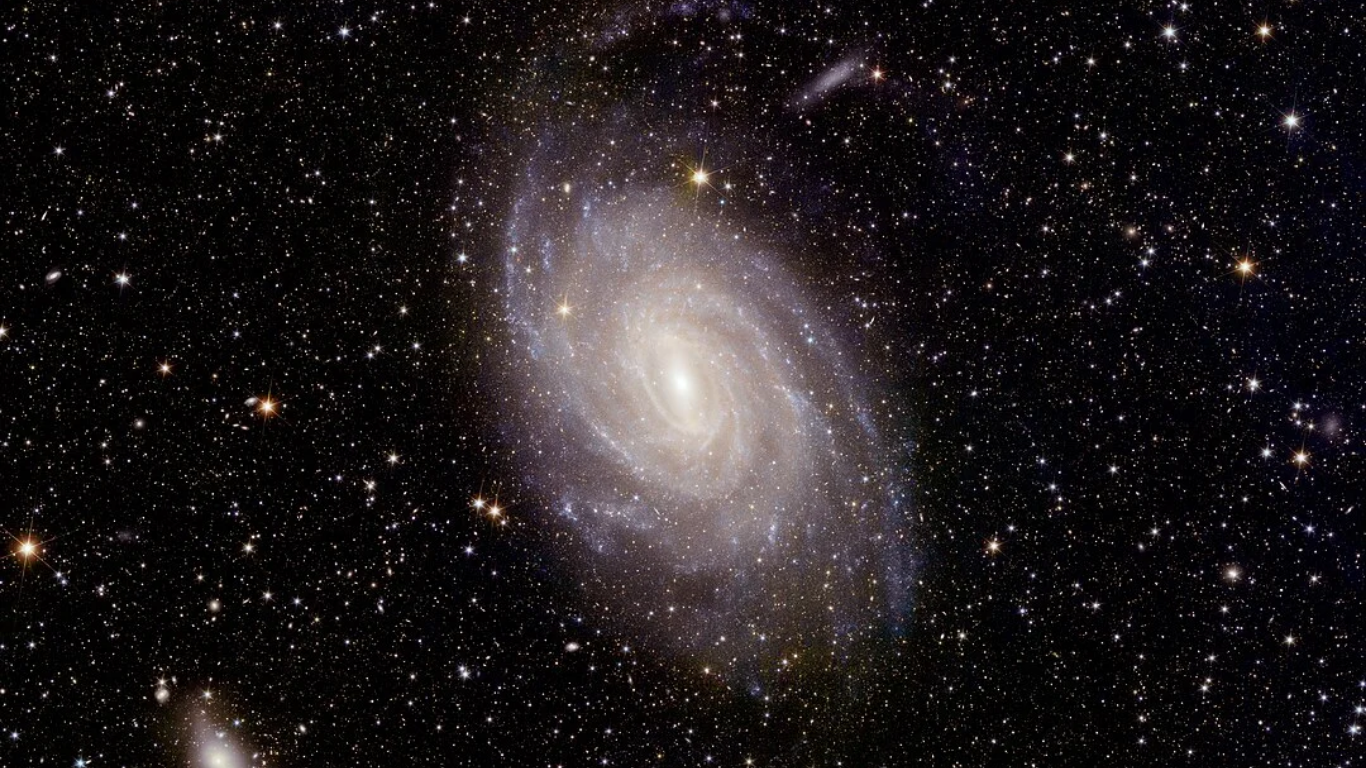
The Euclid telescope is designed to map the geometry of the universe and study dark matter and dark energy. Alongside these goals, it has provided detailed images and measurements of distant galaxies. Researchers noticed that many galaxies showing signs of recent collision or merger events also exhibited high levels of energetic radiation from their central regions, consistent with black holes feeding actively.
These findings support the idea that galactic interactions can funnel gas toward the galactic centre, giving supermassive black holes fresh material to consume. When this happens, the black hole’s surrounding region lights up strongly across multiple wavelengths, making it easier for astronomers to detect and study.
Understanding the connection between galaxy collisions and black hole activation also sheds light on how galaxies evolve. Black hole activity can influence star formation by heating or expelling gas, which may slow or reshape the growth of the host galaxy. The new Euclid data adds a key piece to this complex puzzle by linking dynamic cosmic events to black hole behaviour.
Scientists will continue to analyse the Euclid observations to test these results across larger samples of galaxies. Future studies will help refine how common collision induced black hole activation is and how it affects the long term development of galaxies in the universe. With continued observations, astronomers hope to decode more of the intricate relationship between cosmic structures and the powerful forces that shape them.
About the Author