How Astronomers Find Planets in Other Solar Systems
Astronomers find planets outside our solar system using a range of techniques including the transit method, measuring star wobbles, direct imaging and gravitational microlensing. These approaches help detect exoplanets, estimate their sizes and orbits, and study their atmospheres.
Scientists have discovered thousands of planets orbiting stars beyond our solar system. These worlds, known as exoplanets, are found using several clever methods that allow astronomers to infer their presence even though the planets themselves are often too faint and distant to see directly.
One of the most successful methods is the transit technique. When a planet passes in front of its star from Earth’s perspective, it causes a tiny dip in the star’s brightness. Instruments like NASA’s Kepler and TESS telescopes measure these small dips repeatedly. By tracking the timing and size of the dips, astronomers can determine the planet’s size and orbital period.
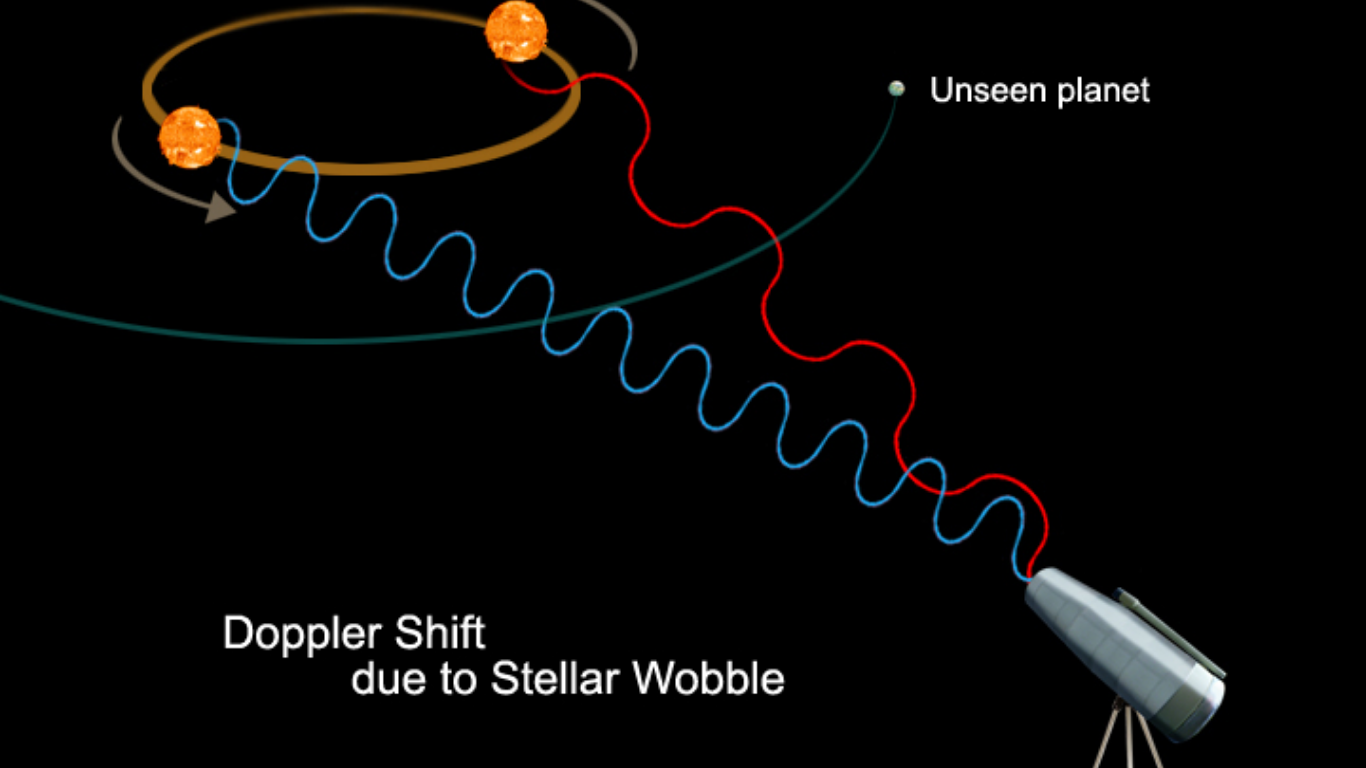
Another major method is radial velocity. Planets exert a small gravitational pull on their stars, causing the star to wobble slightly as the planet orbits. Sensitive spectrographs detect shifts in the star’s light spectrum as it moves toward and away from Earth. This wobble reveals the planet’s mass and helps confirm that a candidate detected by the transit method is an actual planet.
In some cases, planets can be seen directly. Direct imaging is challenging because stars are so bright compared to planets. But with advanced telescopes and techniques such as using a coronagraph to block starlight, astronomers can sometimes capture images of large exoplanets far from their stars.
Gravitational microlensing is another tool. When a massive object passes between Earth and a distant star, its gravity can bend and amplify the star’s light. If a planet orbits the foreground object, it produces a distinctive blip in the light signal. This method is useful for finding planets that are far from their stars or at great distances from Earth.
Each technique has strengths and limitations. The transit method excels at finding planets close to their stars. Radial velocity helps measure mass but works best with larger planets. Direct imaging and microlensing can find distant or unusual systems that other methods might miss.
Together, these approaches have given astronomers a rich catalogue of exoplanets, ranging from small rocky worlds to gas giants. Future telescopes with even greater sensitivity will continue to expand our view of planetary systems, helping scientists understand how planets form and whether some might host conditions suitable for life.
About the Author